Doha, Qatar, 01 Nov. 2026
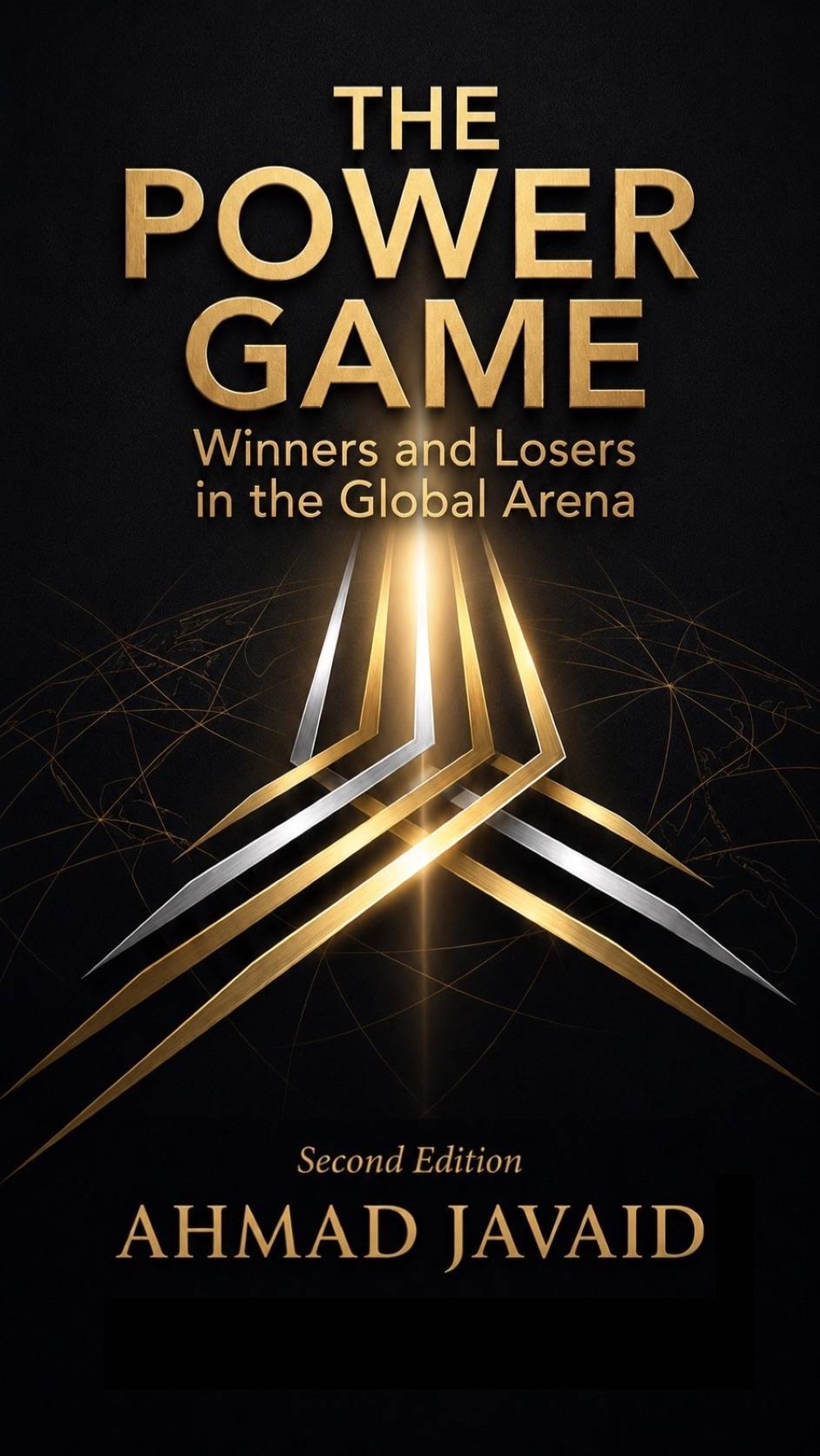
Ahmad Javaid’s book The Power Game: Winners and Losers in the Global Arena has returned with a revised second edition, offering fresh insights into how power is acquired, exercised and transformed in an increasingly complex world.
When Javaid published the first edition, his central message was that understanding the rules of power was essential to avoid being influenced by those who understood them better. Since then, the global landscape has changed considerably, with prolonged conflicts in Ukraine and Gaza, military tensions between India and Pakistan in May 2025, growing competition over artificial intelligence and the emergence of space as another strategic arena.
Published on Amazon in July 2026, the second edition expands the original framework, examining how nations, organisations and individuals can turn their resources into meaningful influence.
At the heart of the book is Javaid’s central argument: “Power is not resources; power is conversion.” He explains that possessing economic, military, technological or human resources does not automatically guarantee success. The real challenge lies in converting these assets into influence, security and tangible results.
Nine dimensions of power
The revised edition expands the original six dimensions into nine, divided into three categories. The core dimensions comprise military, political, economic and technological power. Supporting dimensions include social and soft power, intelligence, covert influence and hidden networks. Environmental, demographic, and religious and ideological power complete the framework.
Space is examined separately as an emerging strategic battleground where all nine dimensions increasingly converge.
Across 33 chapters, the book traces the evolution of power from the Ice and Stone Ages to the Intelligence Age. It introduces practical analytical tools, including the “Three Vs” — Value, Victor and Victim — the Cycle of Power, explaining the rise and decline of empires, and the Power Audit, which helps leaders assess the strengths and weaknesses of nations, organisations and individuals.
An updated epilogue examines developments during 2025 and 2026, while revised references enhance the book's value for students, researchers, policymakers and general readers.
Highlighting the Global South
Particular attention is given to the Middle East, South Asia and the wider Global South. Javaid explores how middle powers, including Pakistan and the Gulf states, are using diplomacy, mediation, technology and economic partnerships to strengthen their positions in an increasingly multipolar world.
“The future belongs to those who study the game, master its dimensions, and act with wisdom,” he observes.
Professional and community contributions
Born in Kuwait and raised in Lahore, Javaid has more than two decades of experience in technology, banking and cybersecurity across Pakistan, Kuwait and Qatar, where he has lived since 2018.
He has addressed more than 15 regional and international professional forums on cybersecurity, digital trust, business resilience and artificial intelligence.
Beyond his professional career, he has held leadership positions in more than 14 social welfare organisations in Kuwait, including the Helpdesk for Pakistani Community in Kuwait. In Qatar, he has served in four community support forums, including the Pakistan Engineers Forum. He has also mentored senior professionals in leadership strategy for more than a decade.
Through The Power Game, Javaid encourages readers to understand global power structures and explore why some nations achieve influence despite having fewer resources.
The second edition is available on Amazon at https://www.amazon.com/dp/B0HD2HH8F6.
Javaid has thanked the community, friends and readers whose encouragement and constructive feedback helped bring both editions to publication.

 American Chamber of Commerce Qatar
 Bangladeshi Community
 Filipino Community
 Indian Community
 Nepali Community
 Pakistani Community
 Sri Lankan Community