Doha, October 13 (QNA)
The Amir of the State of Qatar, Sheikh Tamim bin Hamad Al-Thani, has reaffirmed Qatar’s commitment to safeguarding national sovereignty, strengthening economic resilience, accelerating development and pursuing diplomatic solutions to regional conflicts.
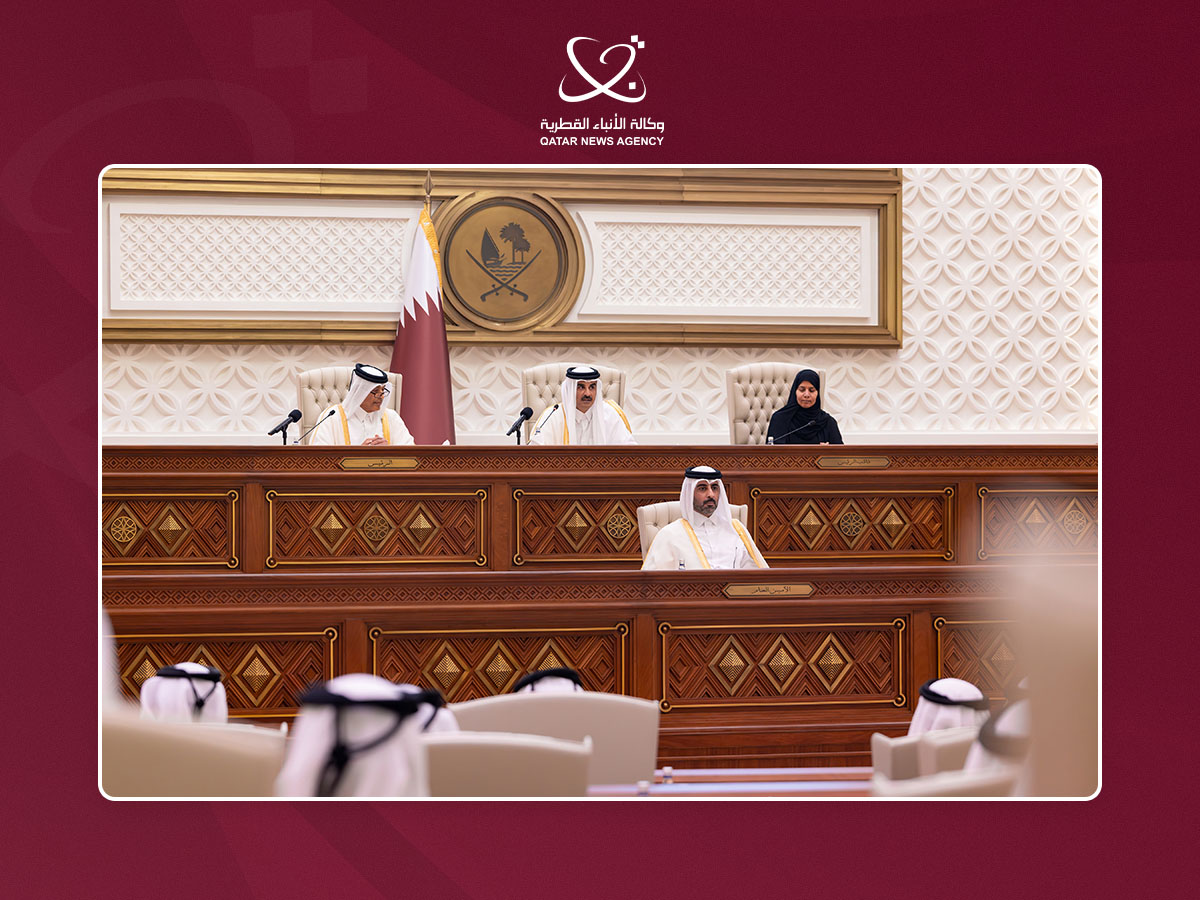
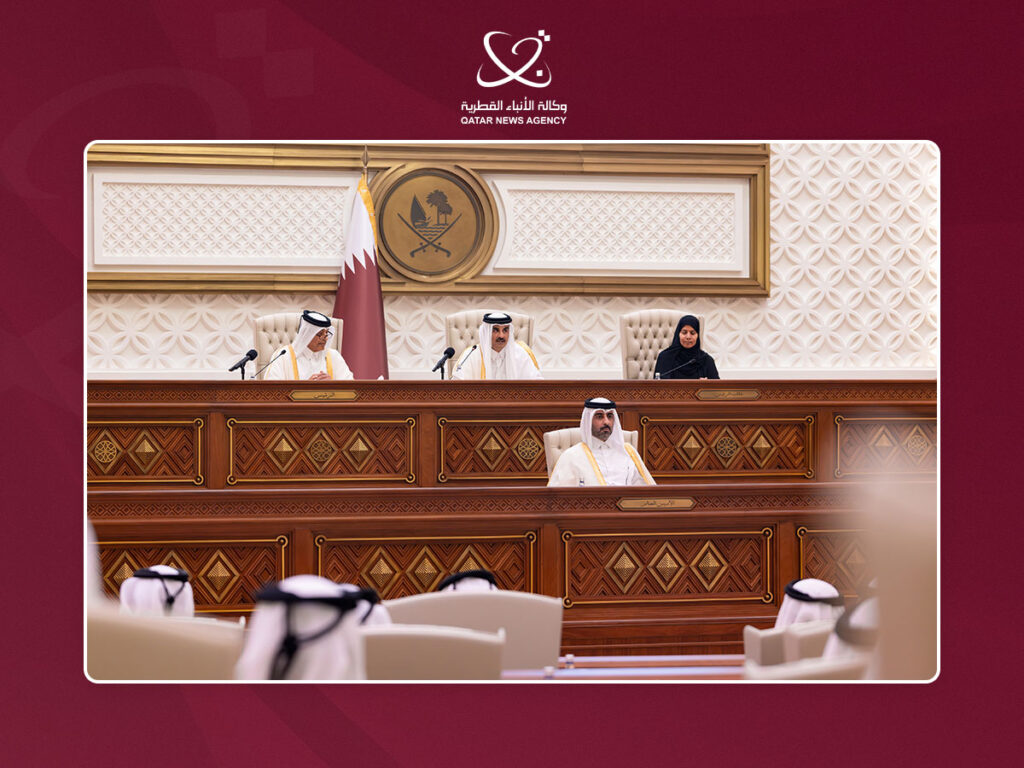
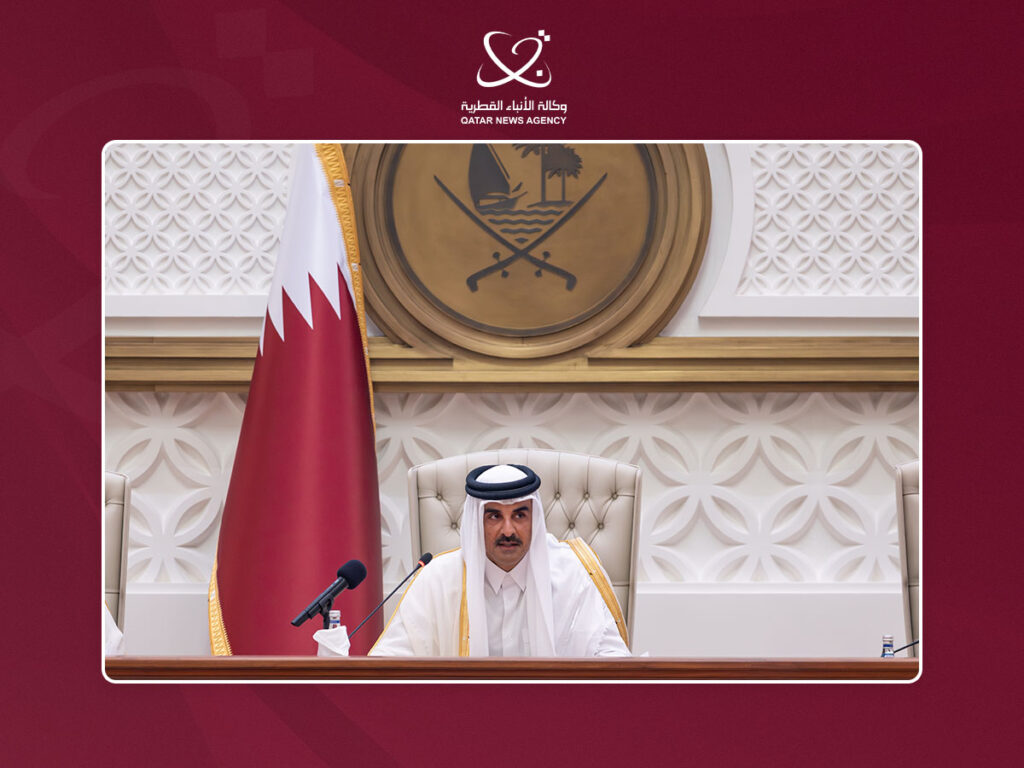
Addressing the opening of the second ordinary session of the second legislative term of the Shura Council, corresponding to its 55th annual session, at Tamim bin Hamad Hall at the Shura Council, the Amir outlined the country’s priorities amid exceptional regional developments and their economic consequences.
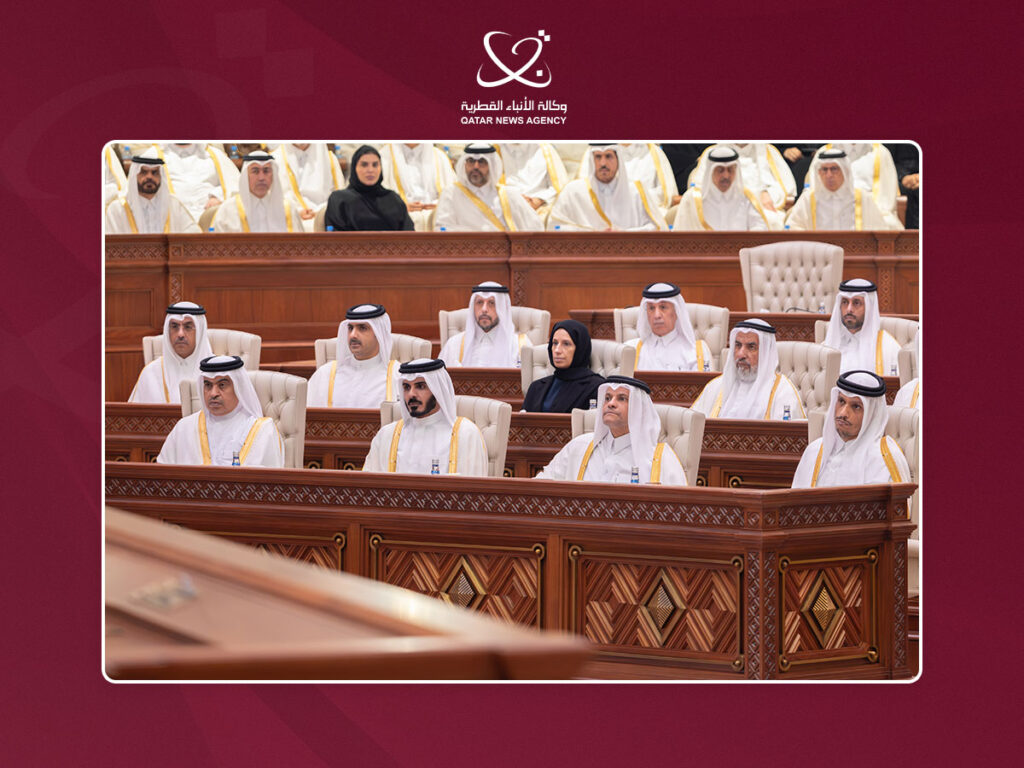
Among the attendees were Sheikh Jassim bin Hamad Al-Thani, the Amir’s Personal Representative; Sheikh Abdullah bin Khalifa Al-Thani; Sheikh Mohammed bin Khalifa Al-Thani; Prime Minister and Minister of Foreign Affairs, Sheikh Mohammed bin Abdulrahman bin Jassim Al-Thani; ministers; heads of diplomatic missions and dignitaries.
Honouring the Father Amir’s Legacy
At the outset, the Amir paid tribute to his father, the late HH Sheikh Hamad bin Khalifa Al-Thani, recalling his lifelong dedication to Qatar and its people.
He highlighted the late Father Amir’s contribution to the country’s comprehensive development, the strengthening of state institutions, the empowerment of women and Qatar’s growing international standing. His confidence in the Qatari people, particularly through investment in education and human capabilities, remained central to his vision.
The Amir stressed that preserving these achievements and building upon the legacy of the late Father Amir represented the most meaningful way to honour his contribution to the nation.
National Unity and Crisis Management
Reflecting on the extraordinary events that have affected Qatar and the wider region in recent months, the Amir praised citizens and residents for their solidarity, awareness and responsible conduct.
He also commended the armed forces, security agencies and state institutions for their preparedness and effective response, describing the cohesion of Qatari society and the strength of national institutions as essential foundations of resilience.
He emphasised that Qatar’s determination to protect its sovereignty, preserve national achievements and safeguard the wellbeing of its people remained unwavering.
The Amir said the country had pursued three responsibilities simultaneously: defending its sovereignty, maintaining its contribution to global energy security and economic stability, and
Economic Resilience and Diversification
The Amir highlighted the importance of Qatar’s economic resilience following disruptions to energy exports caused by the closure of the Strait of Hormuz and damage to energy facilities in Ras Laffan Industrial City.
As a major supplier of liquefied natural gas, accounting for approximately one-fifth of global LNG trade, Qatar plays a significant role in international energy markets. The disruptions therefore had implications extending beyond the country’s borders.
Despite these challenges, the non-hydrocarbon sectors continued to demonstrate strength, accounting for approximately 80 percent of real gross domestic product, according to the address.
The national economy recorded real growth of 2.9 percent in 2025, while average annual inflation remained at 0.5 percent. Qatar also maintained its high sovereign credit ratings and continued to attract foreign direct investment.
The crisis nevertheless placed pressure on public finances, with government revenues declining by 42 percent during the first half of the year and expenditure falling by 14 percent. The Amir emphasised that essential services and development priorities had been protected despite these pressures.
He attributed the country's ability to absorb the impact partly to earlier policies, including strengthening financial reserves, reducing public debt, adopting conservative oil-price assumptions in budgeting and developing non-oil revenue streams.
Looking ahead, he called for continued fiscal discipline, more efficient public spending and careful assessment of programmes according to their actual economic and social benefits.
Qatar, he said, should not simply seek a return to pre-crisis conditions but use the recovery to accelerate diversification, enhance competitiveness and strengthen national capabilities.
Investment and Energy Security
The Amir disclosed that Qatar had a portfolio of projects and investment opportunities worth approximately QR221 billion planned over the next five years.
These opportunities include infrastructure development, public-private partnerships and private-sector investment in real estate and hospitality. He urged the Shura Council to support the next phase through legislation that strengthens private-sector participation and improves the investment environment.
In the energy sector, expansion of the North Field gas project is proceeding according to plan, while the Golden Pass project in the United States has made significant progress. QatarEnergy is also expanding international partnerships and investments while developing petrochemicals, solar energy and water-security initiatives.
The Amir stressed that economic preparedness required both ambition and the ability to respond to adverse global developments.
Qatar’s food-security efforts were also highlighted, with the country ranked first regionally in the 2026 Food System Resilience Index. Continued support for domestic agricultural production, improved storage and transportation, reduced food waste and greater economic efficiency remain important priorities.
Education, Digital Transformation and Governance
Turning to human development, the Amir described investment in people as the foundation of national progress.
He praised advances in Qatar’s higher education institutions, including Qatar University and the universities of Education City, while underscoring the need to strengthen public and private schooling and address the requirements of people with special needs.
Education, he said, must equip young people with the skills demanded by the labour market, alongside critical thinking and cultural awareness. Technological progress must go hand in hand with protecting the Arabic language and reinforcing national identity.
The Amir also highlighted the development of more than 360 new digital services and the advancement of a central database designed to support evidence-based policymaking and performance measurement.
He called for stronger integration among government entities, unified data standards and effective privacy protection.
Administrative reform, he added, must be supported by accountability and integrity. Performance assessments, professional development and promotions should reflect genuine achievement, efficiency and equal opportunities rather than become mere formalities.
Sovereignty, Defence and Regional Security
Addressing national security, the Amir said Qatar had been attacked by Iran in a violation of its sovereignty, international law and the principles of good-neighbourly relations. He praised the armed forces and security agencies for carrying out their responsibilities in defending the country.
He noted that the ability to maintain daily life during a crisis depended on sustained investment in preparedness, training, equipment and institutional readiness.
The Amir reaffirmed that Qatar’s commitment to dialogue should never be interpreted as complacency in defending its territory. Equally, the country’s right to defend its sovereignty did not diminish its determination to prevent a wider regional conflict.
He stressed that regional security was interconnected and called for closer coordination among Gulf Cooperation Council states to protect sovereignty, ensure safe navigation in the Gulf and Strait of Hormuz, and safeguard energy facilities, water infrastructure and civilian assets.
Qatar, he said, would continue working with regional and international partners to promote stability and prevent further escalation.
Palestine and Regional Conflicts
The Amir reaffirmed that the Palestinian cause remained a central priority for Qatar, describing events in Gaza as genocide and calling for accountability for those responsible.
He also condemned continuing Israeli actions against Palestinians in the occupied West Bank, including settler attacks, as well as repeated incursions into Al-Aqsa Mosque and violations of international law and humanitarian principles.
On other regional crises, he reiterated Qatar’s support for comprehensive and fair political settlements in Sudan, Libya, Yemen and Somalia, stressing the importance of preserving territorial unity and meeting the aspirations of their peoples for security and stability.
Shared Responsibility for Qatar’s Future
Concluding his address, the Amir emphasised that national resilience depended on preparedness, economic diversification, effective institutions, social solidarity and individual responsibility.
He called on government institutions and citizens alike to fulfil their duties, protect public funds and place the national interest above all other considerations.
The address set out a clear direction for Qatar: to protect its sovereignty while avoiding wider conflict, sustain economic growth despite external pressures, strengthen human capital and institutional performance, and continue pursuing diplomacy as a means of resolving regional disputes.
The Amir’s message underscored that the country’s response to the current challenges would not be limited to overcoming immediate difficulties. Instead, Qatar aims to emerge stronger, more diversified and better prepared to navigate an increasingly uncertain global environment.

 American Chamber of Commerce Qatar
 Bangladeshi Community
 Filipino Community
 Indian Community
 Nepali Community
 Pakistani Community
 Sri Lankan Community