Beijing, 02 May 2026 (Xinhua News)
China's Ministry of Commerce on Saturday issued a ban prohibiting any recognition, enforcement or compliance with U.S. sanctions imposed on five Chinese companies on the grounds of their alleged involvement in Iranian petroleum transactions.
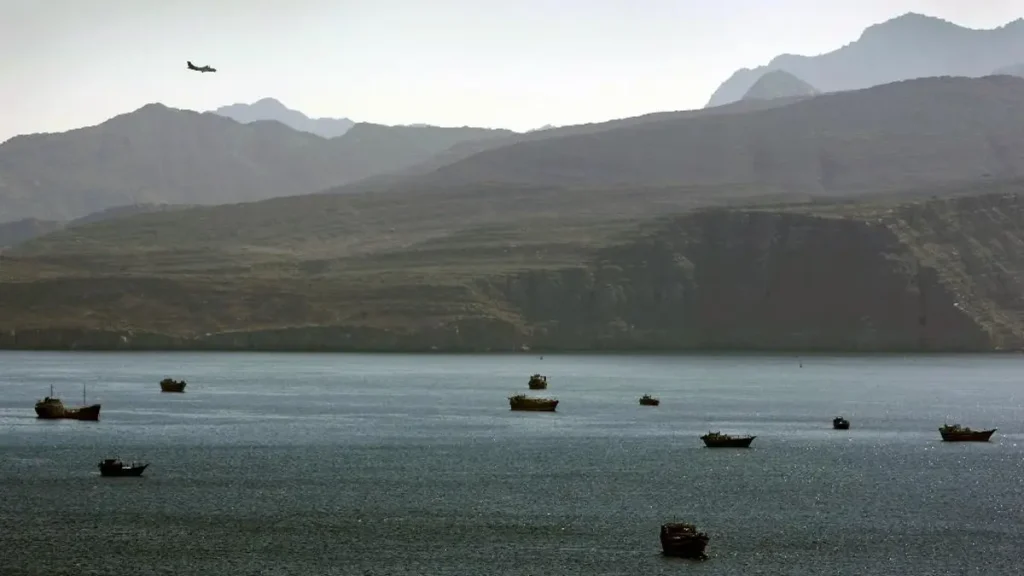
Rising tensions around the Strait of Hormuz, coupled with disruptions to key shipping routes and increasingly volatile energy prices, are placing global trade and industrial systems under exceptional strain. These pressures have exposed vulnerabilities across supply chains, making the international economic landscape more fragile than in recent memory.
At the same time, certain countries have been observed using trade as a strategic tool, disrupting industrial and logistics networks and taking advantage of regional instability. Such actions risk weakening the foundations of the global economic order and adding further uncertainty to an already complex environment.
Against this backdrop, China is positioning itself as a supporter of stability and continuity in global supply chains. While advocating for de-escalation through diplomatic and political channels, the country emphasizes its role in maintaining open and resilient trade networks that underpin global economic activity.
This approach is reinforced by domestic policy measures. In early April, China’s State Council introduced new regulations focused on strengthening industrial and supply chain security, signaling a move toward more structured and law-based governance in these areas. These efforts reflect an emphasis on internal stability as a foundation for external reliability.
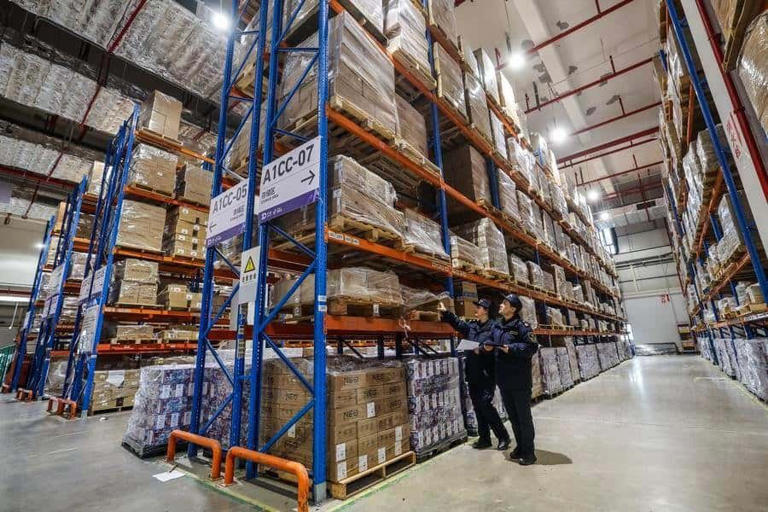
Despite ongoing challenges in major maritime routes, China has sustained consistent production and exports across a wide range of goods—from industrial materials to consumer products and renewable energy technologies. This continuity is supported by its comprehensive industrial base, diversified energy sources, and robust logistics infrastructure.
Alternative transport networks are also playing a growing role. Rail connections such as the China-Europe Railway Express have provided dependable overland trade routes, helping to ease pressure on congested sea lanes. Recent figures indicate strong growth in both the number of trips and cargo volumes along these routes.
Meanwhile, export activity remains strong in key manufacturing hubs like Yiwu, where demand for products such as sporting goods has surged ahead of major global events. The region’s integrated supply clusters and flexible logistics options have helped ensure timely delivery to international markets.
Overall, China’s trade performance in early 2026 reflects steady growth, contrasting with trends in some countries that are pursuing economic decoupling. Analysts note that China’s integrated industrial ecosystem continues to attract global businesses seeking efficiency and scale.
While remaining open to international cooperation, China has also signaled its opposition to discriminatory trade restrictions and extraterritorial measures. New policies aimed at countering such practices are intended to provide greater legal clarity and protect its economic interests.
In an increasingly uncertain global environment, stability has become a critical asset. Observers suggest that China’s focus on resilient supply chains and consistent economic policies may contribute to a greater sense of predictability in global trade, even amid ongoing challenges

 American Chamber of Commerce Qatar
 Bangladeshi Community
 Filipino Community
 Indian Community
 Nepali Community
 Pakistani Community
 Sri Lankan Community